
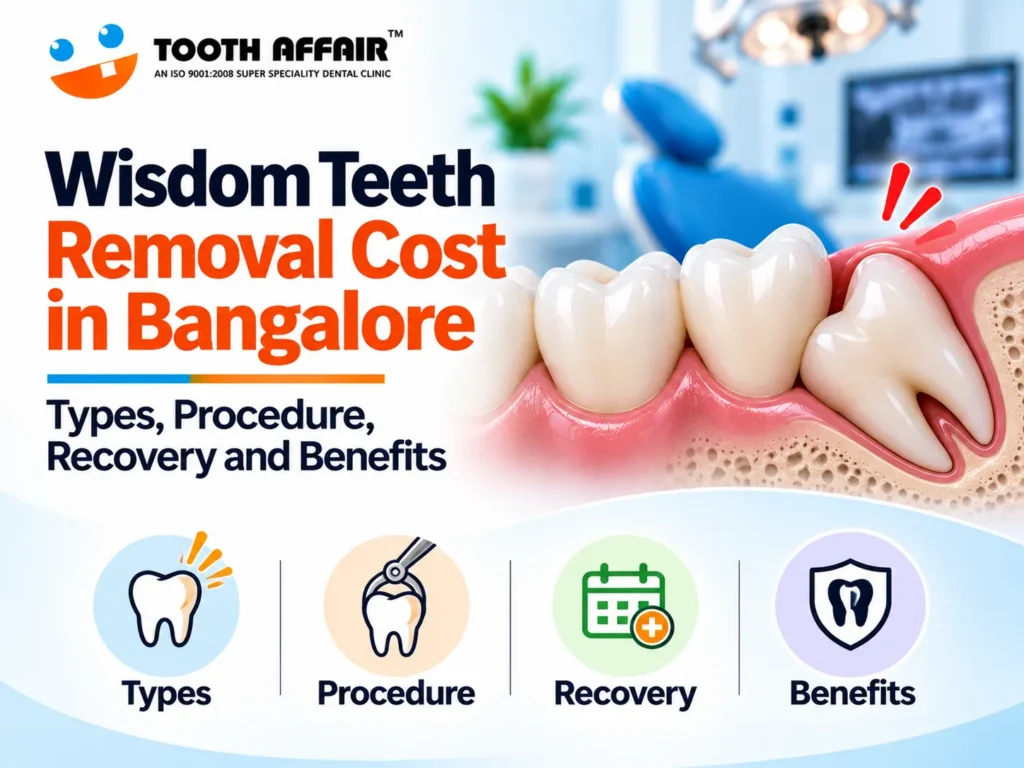
Wisdom teeth are the last permanent teeth to develop, usually appearing between the ages of 17 and 25. While some people have enough space for these teeth to emerge normally, others experience pain, swelling, infection or pressure because their jaws do not have sufficient room. In such cases, a dentist may recommend wisdom tooth extraction to prevent further dental complications. Oral and Maxillofacial Surgery addresses complex dental and jaw conditions, including cases requiring surgical intervention.
The wisdom teeth removal cost in Bangalore generally depends on whether the tooth has fully erupted, is partially impacted or remains trapped inside the gum or jawbone. A simple extraction is usually more affordable, while surgical removal of a deeply impacted wisdom tooth requires additional planning, time and expertise.
Understanding the different types of wisdom tooth removal, their costs, treatment procedures and recovery expectations can help you make an informed decision before visiting a dental clinic.
Quick Answer: How Much Does Wisdom Teeth Removal Cost in Bangalore?
The cost of wisdom teeth removal in Bangalore generally ranges from ₹2,000 to ₹15,000 or more per tooth, depending on the complexity of the extraction and the treatment required.
A fully erupted wisdom tooth may be removed through a simple extraction. However, a partially or completely impacted wisdom tooth may require a surgical procedure involving a gum incision, bone removal or tooth sectioning.
Wisdom Tooth Extraction Cost in Bangalore: Price Table
| Type of Wisdom Tooth Removal | Estimated Cost |
| Simple Wisdom Tooth Extraction | ₹2,000–₹5,000 or more |
| Complex Non-Surgical Extraction | ₹3,500–₹5,500 or more |
| Soft Tissue Impacted Wisdom Tooth Removal | ₹5,000–₹7,500 or more |
| Partially Bone-Impacted Wisdom Tooth Surgery | ₹6,000–₹10,000 or more |
| Fully Bone-Impacted Wisdom Tooth Surgery | ₹7,000–₹15,000 or more |
| Complex or Deeply Impacted Wisdom Tooth Removal | ₹10,000–₹20,000 or more |
| OPG X-ray | ₹500–₹1,500 or more |
| CBCT Scan, If Required | ₹1,500–₹3,000 or more |
Note: These are indicative private-clinic estimates, not fixed treatment fees. The actual wisdom tooth extraction cost depends on the tooth’s position, root structure, proximity to nerves, diagnostic requirements, surgeon’s expertise and clinic. Consultation, scans, medicines and follow-up visits may be charged separately.
- Also Read: Teeth Whitening Cost in Bangalore
What Is Wisdom Tooth Extraction?
Wisdom tooth extraction is a dental procedure in which one or more third molars are removed from the upper or lower jaw. These teeth are located at the back of the mouth and are the last permanent teeth to erupt.
A wisdom tooth does not always need to be removed. If it grows in the correct position, has enough space and can be cleaned properly, a dentist may recommend regular monitoring instead.
However, extraction may be necessary when the tooth causes repeated pain, infection, gum inflammation, decay, damage to neighbouring teeth or other complications.
Depending on its position, a wisdom tooth can be removed through a simple extraction or a surgical procedure.
Main Features of Wisdom Tooth Extraction
- Treatment for impacted teeth: Removes wisdom teeth that remain trapped beneath the gum or inside the jawbone.
- Infection management: Helps address repeated infections around partially erupted wisdom teeth when extraction is clinically indicated.
- Pain and pressure relief: Removes a problematic tooth that may cause discomfort or pressure on surrounding tissues.
- Protection of nearby teeth: Helps prevent damage to the second molar caused by an incorrectly positioned wisdom tooth.
- Surgical and non-surgical options: The dentist selects the extraction method based on the tooth’s position and complexity.
- Local anaesthesia: Numbs the treatment area to minimise pain during the procedure.
Why Do Wisdom Teeth Need to Be Removed?
Wisdom teeth may develop without causing any problems. However, insufficient jaw space or an incorrect eruption angle can create conditions that affect oral health.
A dentist may recommend wisdom tooth removal for the following reasons.
Impacted Wisdom Teeth
An impacted wisdom tooth cannot emerge completely because it is blocked by the neighbouring tooth, gum tissue or jawbone. It may grow sideways, remain partially visible or stay completely beneath the gum.
Impacted teeth can cause pain, swelling, infection and difficulty maintaining oral hygiene.
Repeated Gum Infection
A partially erupted wisdom tooth can create a small pocket of gum tissue around its crown. Food particles and bacteria may accumulate in this area, resulting in a condition called pericoronitis.
Common symptoms include:
- Swollen and tender gums.
- Pain near the back of the jaw.
- Difficulty opening the mouth.
- Bad breath or an unpleasant taste.
- Pain while chewing or swallowing.
Repeated or severe infections may require extraction after a dental assessment.
Tooth Decay
Wisdom teeth are difficult to reach with a toothbrush and dental floss. Their position at the back of the mouth makes proper cleaning challenging, increasing the risk of cavities.
If the wisdom tooth develops extensive decay and cannot be restored predictably, the dentist may recommend removing it.
Damage to Nearby Teeth
An incorrectly positioned wisdom tooth may press against the second molar. This can contribute to food trapping, gum problems, decay or damage to the neighbouring tooth.
Cysts and Other Complications
In some cases, an impacted wisdom tooth may be associated with a cyst or other changes around the tooth. These conditions require clinical examination and appropriate imaging to determine the treatment.
Difficulty Maintaining Oral Hygiene
A partially erupted wisdom tooth may create an area where plaque and food debris accumulate. If repeated cleaning difficulties contribute to gum inflammation or decay, extraction may be considered.
What Are the Different Types of Wisdom Tooth Extraction?
The wisdom tooth extraction procedure depends on how much of the tooth is visible and whether it is covered by gum tissue or jawbone.
Understanding the different extraction methods also helps explain why the wisdom teeth removal cost in Bangalore varies between patients.
Simple Wisdom Tooth Extraction
A simple wisdom tooth extraction is performed when the tooth has erupted completely and is accessible above the gum line.
The dentist uses local anaesthesia to numb the area, loosens the tooth with dental instruments and removes it carefully.
Suitable for:
- Fully erupted wisdom teeth.
- Teeth with accessible crowns.
- Teeth that are not significantly impacted.
- Cases where surgical access is unnecessary.
Estimated cost: ₹2,000–₹5,000 or more per tooth.
Surgical Wisdom Tooth Extraction
Surgical extraction is required when a wisdom tooth cannot be removed using conventional extraction techniques.
The dentist or oral surgeon may make a small incision in the gum to access the tooth. Depending on its position, a small amount of surrounding bone may need to be removed. The tooth may also be divided into smaller sections for controlled removal.
Suitable for:
- Partially erupted wisdom teeth.
- Teeth covered by gum tissue.
- Teeth with difficult root structures.
- Impacted wisdom teeth that require surgical access.
Estimated cost: ₹5,000–₹15,000 or more per tooth.
Soft Tissue Impacted Wisdom Tooth Removal
A soft tissue impacted wisdom tooth has emerged partially but remains covered by gum tissue. The tooth may be visible only in part, making cleaning difficult.
The dentist may need to make an incision in the gum to expose and remove the tooth. Stitches may be required depending on the surgical approach.
Common symptoms:
- Swelling around the back molar.
- Repeated gum infections.
- Food getting trapped around the tooth.
- Discomfort while chewing.
- Bad breath.
Estimated cost: ₹5,000–₹7,500 or more per tooth.
Partially Bony Impacted Wisdom Tooth Removal
A partially bony impacted wisdom tooth is partly covered by jawbone. It may also be positioned at an angle or trapped against the second molar.
Removing this type of tooth generally requires a surgical procedure. The dentist may need to remove a small amount of bone and divide the tooth into sections.
Estimated cost: ₹6,000–₹10,000 or more per tooth.
Fully Bony Impacted Wisdom Tooth Removal
A fully bony impacted wisdom tooth remains completely enclosed within the jawbone. It may be positioned horizontally, vertically or at an unusual angle.
Its removal requires careful surgical planning. The dentist evaluates the tooth’s depth, root structure and proximity to important anatomical structures before proceeding.
Estimated cost: ₹7,000–₹15,000 or more per tooth.
The cost may be higher for deeply positioned teeth or cases requiring additional imaging and specialist surgical care.
What are the Factors Affecting Wisdom Teeth Removal Cost in Bangalore?
The cost of wisdom tooth extraction is not the same for every patient. Two people may require the removal of a wisdom tooth but have different treatment costs because of the tooth’s position, surgical complexity and clinical requirements.
Here are the major factors that influence the final price.
Type of Wisdom Tooth Extraction
The extraction method is one of the most important cost factors.
A fully erupted tooth can often be removed through a simple procedure. However, impacted wisdom teeth may require surgical access, bone removal or tooth sectioning.
As the complexity increases, the procedure generally requires more time, specialised instruments and surgical expertise.
Position and Angle of the Tooth
The direction in which the wisdom tooth grows can influence the difficulty of removal.
A vertically positioned tooth may be easier to access than a horizontally impacted tooth. Teeth angled towards the neighbouring molar or positioned deep inside the jawbone may require more complex surgical planning.
Degree of Impaction
The extent to which a wisdom tooth is trapped beneath the gum or bone directly affects the treatment approach.
- Soft tissue impaction: The crown is covered by gum tissue.
- Partial bony impaction: A portion of the tooth is covered by jawbone.
- Complete bony impaction: The tooth is fully enclosed within the jawbone.
More extensive impaction generally requires a more involved surgical procedure.
Number of Wisdom Teeth Being Removed
The total cost depends on whether the patient needs one, two, three or all four wisdom teeth removed.
Removing multiple teeth in one or two appointments may reduce certain shared expenses, such as consultation or diagnostic imaging. However, the total price still depends on the complexity of each extraction.
Diagnostic X-rays and Scans
Dental imaging helps the dentist understand the position of the wisdom tooth, its roots and its relationship with nearby structures.
Common diagnostic options include:
- RVG X-ray: Provides a focused image of the tooth and surrounding area.
- OPG X-ray: Provides a panoramic view of both jaws and all teeth.
- CBCT scan: Provides three-dimensional information when more detailed assessment is clinically necessary.
An OPG or CBCT scan may add to the overall treatment cost.
Proximity to Nerves and Sinuses
Lower wisdom tooth roots may be close to the inferior alveolar nerve, while upper wisdom teeth may be near the maxillary sinus.
If imaging suggests a close relationship with these structures, the dentist may recommend additional assessment or specialist surgical planning.
Such cases can be more complex and may increase the cost.
Dentist’s or Oral Surgeon’s Expertise
The experience and qualifications of the treating dentist can influence the treatment fee.
Complex impacted wisdom tooth removal may require an oral and maxillofacial surgeon with specific training in dental and facial surgery.
Anaesthesia and Sedation Requirements
Most wisdom tooth extractions are performed using local anaesthesia, which numbs the treatment area.
For selected patients or complex procedures, additional sedation or general anaesthesia may be considered. These options require appropriate facilities and monitoring and can increase the overall treatment cost.
Clinic Location and Facilities
Dental treatment prices may vary across Bangalore depending on the clinic’s location, infrastructure, equipment and operating costs.
Clinics in premium commercial areas may charge differently from those in residential neighbourhoods. The availability of digital imaging, surgical facilities and specialist care can also influence pricing.
Medicines and Follow-Up Visits
After extraction, the dentist may prescribe medication to manage pain or other symptoms and provide instructions for wound care.
Follow-up visits may be needed to assess healing or remove non-dissolvable stitches. Check whether these services are included in the quoted treatment price.
Wisdom Tooth Extraction: Simple vs Surgical Removal
Both procedures aim to remove a problematic wisdom tooth, but the treatment approach differs according to the tooth’s position.
| Comparison | Simple Extraction | Surgical Extraction |
| Tooth position | Usually fully erupted | Partially or fully impacted |
| Gum incision | Usually not required | May be required |
| Bone removal | Usually not required | May be necessary |
| Tooth sectioning | Usually not required | May be required |
| Anaesthesia | Local anaesthesia | Usually local anaesthesia; other options may be considered |
| Stitches | Usually unnecessary | May be required |
| Treatment complexity | Lower | Higher |
| Recovery | Often quicker | May involve more swelling and discomfort |
| Estimated cost | ₹2,000–₹5,000 or more | ₹5,000–₹15,000 or more |
Wisdom Tooth Removal Procedure: Step-by-Step
The wisdom tooth removal procedure begins with a dental examination and diagnostic imaging. The dentist evaluates the tooth’s position and selects an appropriate extraction method.
Here is what generally happens during treatment.
Step 1: Dental Consultation and Examination
The dentist examines the wisdom tooth, surrounding gums and neighbouring teeth. They check for swelling, infection, decay, tenderness and other signs of complications.
The dentist also reviews your medical history, current medicines and any relevant allergies.
Step 2: Dental X-ray or Scan
An RVG or OPG X-ray may be recommended to understand the position of the wisdom tooth and its roots.
A CBCT scan may be required when a three-dimensional assessment is necessary, particularly for selected complex cases.
Step 3: Anaesthesia Administration
Local anaesthesia is administered to numb the tooth and surrounding tissues.
You may feel pressure or movement during the extraction, but you should not feel sharp pain. Inform the dentist if you experience pain during the procedure.
Step 4: Tooth Removal
For a simple extraction, the dentist loosens the tooth and removes it using appropriate dental instruments.
For surgical extraction, a small gum incision may be made to expose the tooth. Bone removal or tooth sectioning may be required depending on its position.
Step 5: Cleaning and Stitches
After removing the tooth, the dentist cleans the extraction site and checks for remaining debris.
Stitches may be placed to close the gum tissue and support healing. The dentist then places gauze over the area to help control bleeding.
Step 6: Post-Extraction Instructions
Before you leave, the dentist explains how to care for the extraction site, manage discomfort and maintain oral hygiene.
You may also receive medication and instructions for a follow-up appointment.
What are the Benefits of Wisdom Tooth Removal?
Wisdom tooth removal can help prevent or manage complications when a tooth is causing dental problems. The benefits depend on the patient’s condition and the reason for extraction.
Helps Manage Repeated Gum Infections
Removing a problematic wisdom tooth may help prevent repeated episodes of infection around a partially erupted tooth.
Reduces Pain Caused by a Problematic Tooth
When the wisdom tooth is responsible for persistent pain or pressure, extraction can address the underlying source of discomfort.
Protects the Second Molar
A poorly positioned wisdom tooth can contribute to decay, food trapping or damage to the neighbouring second molar. Removing it may help protect the adjacent tooth.
Makes Oral Hygiene Easier
Removing a difficult-to-clean wisdom tooth may reduce food accumulation and plaque retention in the affected area.
Helps Manage Certain Cysts and Other Problems
If a wisdom tooth is associated with a cyst or another abnormality, extraction may form part of the recommended treatment plan.
Addresses Problems Before They Progress
When extraction is clinically indicated, timely treatment may help prevent an existing dental problem from becoming more complicated.
Important: Wisdom teeth do not need to be removed automatically. A healthy, properly positioned and functional wisdom tooth may be monitored instead of extracted. Your dentist should recommend removal based on clinical findings.
Is Wisdom Tooth Extraction Painful?
Wisdom tooth extraction is generally performed under local anaesthesia, which numbs the treatment area during the procedure.
You may experience pressure, pulling or movement, but sharp pain should not be expected. If you feel pain, inform your dentist so they can assess whether additional anaesthesia is required.
After the anaesthesia wears off, some discomfort, swelling and tenderness are common. These symptoms are generally more noticeable after surgical extraction, particularly when the tooth is deeply impacted.
Your dentist may recommend suitable medication and home-care measures to manage discomfort during recovery.
Wisdom Tooth Extraction Recovery Time
Recovery depends on the type of extraction, the position of the tooth and the patient’s healing response.
A simple extraction usually involves a shorter recovery period than a complex surgical procedure.
Wisdom Tooth Removal Recovery Timeline
| Recovery Period | What to Expect |
| First 24 hours | Blood clot forms; mild bleeding and discomfort may occur |
| Days 2–3 | Swelling and soreness may be more noticeable |
| Days 3–5 | Pain and swelling generally begin to improve |
| Days 5–7 | Many patients can return to most routine activities |
| 1–2 weeks | Gum tissue continues healing; stitches may be removed if necessary |
| Following weeks | Deeper tissues and bone continue to heal |
Recovery varies. Some patients recover sooner, while complicated surgical extractions may require more time.
Tips for Faster Wisdom Tooth Extraction Recovery
- Follow the dentist’s instructions and take prescribed medication as directed.
- Rest after the procedure and avoid strenuous exercise during the initial recovery period.
- Apply a cold compress externally if recommended to help manage swelling.
- Eat soft foods such as curd, mashed potatoes, khichdi and cooled soups.
- Avoid chewing directly on the extraction side during the early healing period.
- Do not smoke or use tobacco because these can interfere with healing.
- Avoid drinking through a straw, forceful spitting or vigorous rinsing during the first 24 hours.
- Maintain oral hygiene carefully without disturbing the extraction site.
- Attend follow-up appointments as advised by your dentist.
Foods to Eat and Avoid After Wisdom Tooth Removal
Your food choices can affect comfort and recovery after extraction. Soft foods are generally easier to eat during the initial healing period.
Foods to Eat After Wisdom Tooth Extraction
- Curd and yoghurt.
- Mashed potatoes.
- Soft khichdi.
- Well-cooked and cooled vegetables.
- Mashed bananas.
- Smooth, non-hot soups.
- Soft scrambled or boiled foods, if part of your diet.
- Oatmeal or porridge.
- Smoothies eaten with a spoon rather than through a straw.
Foods to Avoid After Wisdom Tooth Extraction
- Hard foods such as nuts and chips.
- Crunchy snacks and toast.
- Very hot foods and beverages during the initial period.
- Spicy foods that may irritate the extraction site.
- Sticky foods that can get trapped around the wound.
- Seeds and small food particles that may enter the socket.
- Alcohol during recovery, especially when taking prescribed medication.
- Smoking and tobacco products.
Gradually return to your normal diet as your comfort improves and your dentist permits.
Possible Risks and Complications of Wisdom Tooth Removal
Wisdom tooth extraction is a common dental procedure, but complications can occur, particularly in complex surgical cases.
Understanding possible risks helps patients recognise when they need professional attention.
Swelling and Bruising
Some swelling and bruising around the jaw and cheek may occur after extraction. This is generally temporary and often improves over several days.
Dry Socket
Dry socket occurs when the blood clot at the extraction site is lost or breaks down before the wound heals properly.
It can cause significant pain, sometimes radiating towards the ear or jaw. Contact your dentist if you experience increasing pain after an initial period of improvement.
Infection
Bacterial infection may develop around the extraction site. Symptoms can include worsening pain, persistent swelling, fever, pus or an unpleasant taste.
Bleeding
Minor bleeding or blood-stained saliva may occur during the initial recovery period. Persistent or heavy bleeding requires dental attention.
Nerve Injury
Lower wisdom teeth may be close to nerves that provide sensation to the lower lip, chin or tongue. In some cases, extraction can cause temporary or, rarely, lasting changes in sensation.
Pre-operative imaging helps the dentist assess this risk and plan treatment.
Sinus Communication
The roots of upper wisdom teeth may be close to the maxillary sinus. In selected cases, extraction can create an opening between the mouth and sinus, requiring additional care.
When Should You Contact Your Dentist?
Seek dental advice if you experience:
- Heavy or persistent bleeding.
- Severe pain that does not improve with prescribed medication.
- Increasing swelling after the initial recovery period.
- Fever or signs of infection.
- Difficulty swallowing or breathing.
- Persistent numbness or altered sensation.
- Pus or a foul taste from the extraction site.
Difficulty breathing or swallowing requires urgent medical attention.
How to Choose the Right Dental Clinic for Wisdom Tooth Removal in Bangalore
Choosing a dental clinic involves more than comparing the wisdom tooth extraction cost. The dentist’s experience, treatment planning, diagnostic facilities and post-operative support are equally important.
Consider these factors before selecting a clinic.
Check the Dentist’s Qualifications
For complex impacted wisdom teeth, consider a dentist or oral and maxillofacial surgeon with appropriate surgical training and experience.
Understand the Treatment Plan
Ask whether your case requires simple extraction or surgical removal. The dentist should explain the tooth’s position, expected procedure and possible complications.
Check Diagnostic Facilities
Appropriate imaging helps the dentist evaluate the tooth’s roots and their relationship with nearby nerves or the sinus.
Ask for a Clear Cost Estimate
Request a breakdown of consultation, X-rays, extraction, anaesthesia, medicines and follow-up charges. Confirm whether additional costs may apply.
Understand Recovery and Aftercare Support
Choose a clinic that provides clear post-operative instructions and a way to contact the dental team if you experience unexpected symptoms.
Review Patient Feedback
Patient reviews may help you understand the clinic’s communication, appointment experience and follow-up support. However, reviews should not replace checking the dentist’s qualifications and treatment suitability.
Wisdom Tooth Removal at Tooth Affair
Wisdom tooth pain, swelling and repeated gum infections can make eating and everyday activities uncomfortable. A dental examination can help identify whether the problem is caused by an impacted wisdom tooth, infection or another dental condition.
At Tooth Affair, patients can seek a dental assessment to understand their wisdom tooth condition and discuss suitable treatment options. The dentist can evaluate the tooth’s position, review diagnostic images where required and explain whether simple extraction or surgical removal may be appropriate.
Before proceeding, patients should understand the expected procedure, recovery requirements and complete treatment estimate.
Book a dental consultation with Tooth Affair to discuss your wisdom tooth concerns and understand the appropriate treatment approach.
Conclusion
The wisdom teeth removal cost in Bangalore depends mainly on the type of extraction, degree of impaction, tooth position, diagnostic requirements and the dentist’s expertise. A simple extraction may cost around ₹2,000–₹5,000, while surgical removal of an impacted wisdom tooth may range from ₹5,000 to ₹15,000 or more.
Not every wisdom tooth needs to be removed. However, persistent pain, repeated infections, decay or damage to neighbouring teeth should be evaluated by a dentist. An examination and appropriate dental imaging can help determine whether extraction is necessary and which treatment approach is suitable.
If you are experiencing wisdom tooth pain or swelling, consult a dentist to understand the cause, available treatment options and expected cost before proceeding.
FAQs About Wisdom Teeth Removal Cost in Bangalore
Find answers to common questions about wisdom teeth removal cost in Bangalore, including treatment options, recovery, aftercare and factors that influence extraction prices.