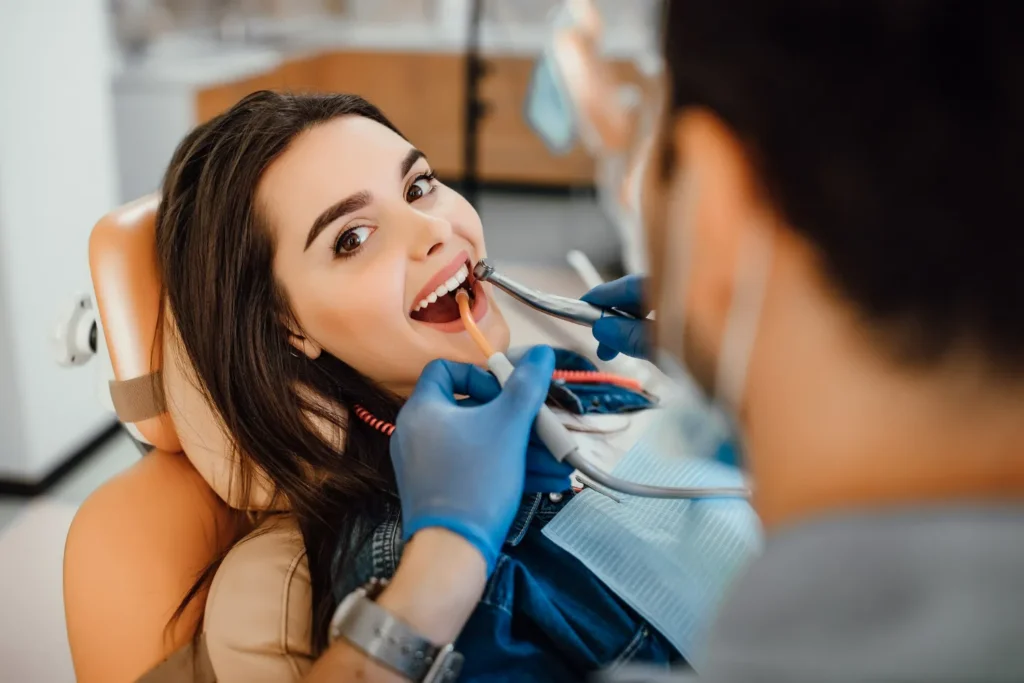
A bright, white smile can improve the appearance of your teeth and make you feel more confident. However, everyday habits such as drinking coffee and tea, consuming coloured foods, smoking, and ageing can gradually change the natural colour of teeth. These stains may not disappear completely with regular brushing, which is why many people consider professional teeth whitening.
Teeth whitening, also known as dental bleaching, is a cosmetic dental procedure that uses specialised whitening agents to lighten the colour of natural teeth. A dentist first examines your teeth and gums to identify the cause of discolouration and determine whether whitening is suitable.
In this guide, we explain the cost of teeth whitening in Bangalore, different whitening methods, factors affecting treatment prices, expected results, and aftercare tips. We also compare professional teeth cleaning with teeth whitening to help you understand which treatment is appropriate for your dental concerns.
Quick Answer: What Is the Cost of Teeth Whitening in Bangalore?
The teeth whitening cost in Bangalore generally ranges from ₹4,000 to ₹20,000 or more, depending on the whitening method, products used, severity of discolouration, and number of sessions required. Professional in-clinic whitening, laser teeth whitening, and dentist-supervised take-home kits have different prices and treatment timelines.
What Is Teeth Whitening?
Teeth whitening is a cosmetic dental procedure that lightens the colour of natural teeth by reducing stains and discolouration. It generally involves applying a bleaching agent, such as hydrogen peroxide or carbamide peroxide, to the tooth surface.
These whitening agents penetrate the tooth structure and break down stain-causing compounds, making the teeth appear lighter. Depending on the method, treatment may be performed at a dental clinic or at home using dentist-provided whitening trays.
Teeth whitening is commonly recommended for people with yellowish or stained teeth who want to improve their smile without changing the natural shape of their teeth.
What Are the Main Features of Teeth Whitening?
- Removes or reduces stains: Professional bleaching helps reduce certain stains caused by coffee, tea, tobacco, and other staining substances.
- Lightens natural tooth colour: Whitening agents help make natural teeth appear brighter by breaking down stain molecules.
- Offers different treatment options: Patients may choose in-office whitening, laser-assisted whitening, or dentist-supervised take-home trays.
- Provides customised treatment: The dentist selects the whitening approach based on the tooth shade, stain type, and oral health condition.
- Improves smile appearance: A brighter tooth shade can improve the overall appearance of your smile.
- Does not require crowns or veneers: Suitable patients can improve tooth colour without undergoing restorative procedures.
Teeth whitening does not change the colour of dental crowns, veneers, fillings, or other existing restorations. A dentist should assess these restorations before treatment to avoid noticeable colour differences.
Teeth Whitening Cost in Bangalore
The cost of teeth whitening in Bangalore depends on the procedure, whitening system, products, and treatment requirements. Basic professional whitening may cost less than advanced laser-assisted or branded whitening systems.
The following table provides indicative private-clinic price ranges in Bangalore.
| Teeth Whitening Treatment | Estimated Cost in Bangalore |
| In-clinic professional teeth whitening | ₹4,000–₹15,000 |
| Laser teeth whitening | ₹8,000–₹20,000+ |
| Custom take-home whitening trays | ₹3,000–₹8,000 |
| Combination whitening treatment | ₹8,000–₹18,000+ |
| Over-the-counter whitening products | ₹500–₹2,500 |
| Internal bleaching for a discoloured tooth | ₹2,000–₹5,000 per tooth |
| Professional scaling and polishing | ₹500–₹3,000 |
Note: These are indicative prices based on published dental clinic pricing in Bangalore and general Indian treatment estimates. They are not fixed fees or confirmed prices from a particular clinic. Actual charges vary according to the whitening system, clinic, dentist, number of sessions, and treatment inclusions.
How Much Does Professional Teeth Whitening Cost?
Professional in-clinic teeth whitening generally costs ₹4,000–₹15,000 in Bangalore. The dentist applies a professional whitening gel to the teeth after protecting the gums and other soft tissues.
The treatment may take approximately 45–90 minutes, depending on the whitening system and application cycles. Some patients achieve noticeable improvement in one appointment, while others may require additional treatment.
How Much Does Laser Teeth Whitening Cost?
Laser teeth whitening may cost approximately ₹8,000–₹20,000 or more in Bangalore. The procedure uses a professional bleaching gel along with a suitable light or laser-assisted system, depending on the technology used by the clinic.
The final price depends on the equipment, whitening product, number of application cycles, and whether cleaning or follow-up care is included.
How Much Do Take-Home Teeth Whitening Kits Cost?
Dentist-supervised take-home whitening kits generally cost ₹3,000–₹8,000 in Bangalore. They typically include custom-made trays and professional whitening gel.
Patients wear the trays according to the dentist’s instructions over several days or weeks. This approach provides gradual whitening and may also be used for maintenance after in-office treatment.
Different Types of Teeth Whitening Treatments Available in Bangalore
Dental clinics offer different teeth whitening options depending on the patient’s preferences, tooth condition, stain type, and expected results.
Understanding each method can help you compare treatment costs and choose an appropriate option with your dentist.
In-Office Professional Teeth Whitening
In-office professional teeth whitening is performed by a dentist at a dental clinic. It uses a professional-grade bleaching gel to reduce stains and lighten the natural tooth shade.
Before applying the gel, the dentist examines your teeth and gums, records your existing tooth shade, and protects the soft tissues. The whitening gel is then applied to the visible tooth surfaces for a controlled period.
Depending on the system, the gel may be used with a special light or without light activation. The dentist may apply multiple cycles during the appointment to achieve the planned result.
- Estimated In-Office Professional Teeth Whitening Cost in Bangalore: ₹4,000–₹15,000 or more.
Key Features:
- Performed under professional dental supervision.
- Uses professional whitening agents.
- Usually completed in one clinic appointment.
- Allows the dentist to monitor the whitening process.
- Treatment intensity can be adjusted according to individual needs.
Advantages of In-Office Whitening:
- Provides noticeable improvement within a relatively short time.
- Allows professional assessment before treatment.
- Helps manage gum protection and sensitivity concerns.
- Offers a controlled alternative to unsupervised bleaching products.
- Can be suitable for patients who want quicker cosmetic improvement.
Who Should Consider It?
In-office whitening may suit adults with healthy teeth and gums who want to reduce yellowing or stains and prefer treatment at a dental clinic.
Laser Teeth Whitening
Laser teeth whitening is a professional cosmetic dental procedure that uses a bleaching gel along with a laser-assisted system. The dentist applies the whitening agent to the tooth surfaces and uses the selected device according to the manufacturer’s treatment protocol.
The process is designed to reduce tooth discolouration within a clinic appointment. The exact technique and whether light activation is required depend on the whitening system.
It is important to understand that not every light-assisted whitening procedure uses a laser. Some clinics use LED or other specialised light systems, so ask which technology is actually included in the treatment.
- Estimated Laser Teeth Whitening Cost in Bangalore: ₹8,000–₹20,000 or more.
Key Features:
- Performed by a dental professional.
- Uses professional bleaching gel.
- May involve multiple application cycles.
- Requires protection of the gums and soft tissues.
- Provides an in-clinic whitening option.
Advantages of Laser-Assisted Whitening:
- Can provide visible shade improvement in a short period.
- Allows the dentist to monitor the procedure.
- May suit patients who prefer a clinic-based whitening session.
- Provides a professionally controlled approach to tooth bleaching.
- Can be planned according to the patient’s existing tooth shade.
Who Should Consider It?
Laser-assisted whitening may be suitable for patients seeking a professional whitening procedure and quicker cosmetic results. The dentist must first check whether the tooth discolouration is likely to respond to bleaching.
Custom Take-Home Teeth Whitening Kits
Custom take-home whitening kits allow patients to whiten their teeth at home under a dentist’s supervision. The dentist takes impressions or scans of the teeth and prepares customised trays that fit the patient’s mouth.
The patient receives the trays and a professional whitening gel with instructions about how much gel to use and how long to wear them.
Treatment usually takes several days or weeks, depending on the product concentration and the dentist’s recommended schedule.
- Estimated Custom Take-Home Teeth Whitening Kits Cost in Bangalore: ₹3,000–₹8,000 or more.
Key Features:
- Uses custom-fitted whitening trays.
- Includes professional whitening gel.
- Allows gradual whitening at home.
- Requires following the dentist’s application instructions.
- May be used for maintenance after professional in-office treatment.
Advantages of Take-Home Whitening:
- Offers flexibility to complete treatment at home.
- Allows gradual improvement in tooth shade.
- Provides trays designed for the patient’s teeth.
- Can be useful for selected patients who prefer a gradual approach.
- May offer a more affordable option than certain in-clinic procedures.
Who Should Consider It?
Dentist-supervised take-home whitening may suit patients who prefer gradual results and can follow the recommended application schedule consistently.
Combination Teeth Whitening Treatment
Combination teeth whitening involves professional in-office whitening followed by a dentist-supervised take-home whitening plan.
The clinic session provides the initial whitening, while the take-home trays may be used for additional treatment or maintenance according to the dentist’s instructions.
The exact combination varies by clinic and individual treatment plan.
- Estimated Combination Teeth Whitening Treatment Cost in Bangalore: ₹8,000–₹18,000 or more.
Key Features:
- Combines in-office and take-home treatment.
- May include custom whitening trays.
- Provides a structured approach to initial whitening and maintenance.
- Allows the dentist to monitor the patient’s progress.
- Treatment duration depends on the prescribed plan.
Advantages of Combination Whitening:
- Offers both clinic-based and home-based treatment.
- Allows gradual maintenance after the initial session.
- Provides flexibility in managing whitening results.
- May be useful for selected patients who need additional whitening.
- Helps patients follow a planned maintenance schedule.
Who Should Consider It?
Combination whitening may be considered by patients who want professional in-clinic treatment along with a planned home-maintenance option. The dentist will determine whether both methods are necessary.
Over-the-Counter Teeth Whitening Products
Over-the-counter whitening products are available through pharmacies and retail stores. Common options include whitening strips, whitening toothpastes, gels, and pens.
These products vary in their ingredients and effectiveness. Whitening toothpastes mainly help remove surface stains through cleaning and polishing, while certain strips and gels contain bleaching ingredients that may lighten natural teeth.
- Estimated Over-the-Counter Teeth Whitening Products Cost in Bangalore: ₹500–₹2,500 or more, depending on the product.
Key Features:
- Available without a clinic-based whitening appointment.
- Includes different product formats.
- Offers varying levels of stain removal or bleaching.
- Results depend on the product formulation and usage.
- Does not provide the same level of individual assessment as dentist-supervised treatment.
Limitations:
- Results may be less predictable than professional treatment.
- Generic trays may not fit properly.
- Incorrect use may irritate gums or increase sensitivity.
- Whitening toothpaste cannot change the natural tooth colour in the same way as bleaching.
- Products may not be suitable for people with existing dental problems.
Consult a dentist before using bleaching products, particularly if you have sensitive teeth, gum problems, cavities, or dental restorations.
What Factors Affect the Cost of Teeth Whitening in Bangalore?
The cost of teeth whitening in Bangalore varies from one dental clinic to another. Even patients choosing the same treatment method may receive different estimates because of differences in tooth condition, whitening requirements, and clinic facilities.
The following factors can influence the total treatment cost.
Type of Whitening Treatment
The selected whitening method is one of the main factors affecting the price.
Basic in-office whitening may cost less than advanced laser-assisted or branded systems. Custom take-home kits may also have different prices depending on whether they include professional gel, customised trays, and follow-up consultations.
Before selecting a method, ask the dentist to explain what is included in the quoted price.
Severity and Type of Tooth Staining
The cause and extent of tooth discolouration influence the treatment plan.
Surface stains caused by coffee, tea, tobacco, and coloured foods may respond differently from deeper stains caused by ageing, trauma, certain medications, or developmental conditions.
Mild yellowing may require a different approach from severe or intrinsic discolouration. Some deep stains may not respond predictably to conventional whitening, and alternative cosmetic treatments may need to be considered.
Number of Sessions Required
Some patients achieve their desired improvement with one in-office session, while others may need additional applications or a separate treatment plan.
The number of sessions depends on the existing tooth shade, stain type, whitening system, and the response of the teeth.
Additional appointments or touch-up treatments may increase the overall cost.
Whitening Gel and Product Brand
The whitening agent and product system used by the clinic can affect treatment charges.
Professional products may differ in peroxide concentration, formulation, application method, and manufacturer. Branded whitening systems may have different prices from standard professional bleaching products.
Ask the dentist which whitening product is being used and whether it is appropriate for your teeth.
Dental Clinic Facilities and Technology
Clinics may use different equipment and treatment systems for professional whitening.
Some use standard in-office bleaching systems, while others offer branded light-assisted or laser-assisted procedures. The equipment, consumables, clinic facilities, and treatment protocol can influence the final price.
However, a more expensive system does not automatically guarantee better results for every patient.
Dentist’s Experience and Expertise
The dentist’s training and experience can influence consultation and treatment fees.
Professional whitening requires an assessment of the teeth, identification of the stain type, selection of an appropriate bleaching method, and protection of the surrounding soft tissues.
A dentist experienced in cosmetic dentistry can also help determine whether whitening alone is sufficient or whether another treatment is more appropriate.
Professional Teeth Cleaning Before Whitening
Some patients have plaque, tartar, and surface stains that need to be addressed before whitening.
The dentist may recommend scaling and polishing to clean the teeth and improve the visibility of their natural shade. This can help identify how much discolouration remains after surface deposits are removed.
Professional cleaning may be included in a whitening package or charged separately. Ask the clinic whether scaling and polishing are part of the treatment estimate.
Existing Dental Restorations
Crowns, veneers, fillings, and other restorations do not change colour in response to conventional tooth bleaching.
If these restorations are visible when you smile, whitening the surrounding natural teeth may create a colour mismatch.
The dentist may need to assess whether restoration replacement or another cosmetic option is necessary after whitening. Such additional procedures can increase the total treatment cost.
Clinic Location in Bangalore
Dental whitening prices may vary across different parts of Bangalore.
Clinics in premium commercial areas may have different operating costs and pricing structures compared with clinics in residential neighbourhoods. Facilities, equipment, and service arrangements also contribute to price differences.
Compare the treatment method and package inclusions rather than choosing a clinic based only on its advertised starting price.
Teeth Cleaning vs Whitening: Which Is Right for You?
Teeth cleaning and teeth whitening are two different dental procedures. Although both can make your smile appear brighter, they address different problems.
Professional teeth cleaning removes plaque, tartar, and surface deposits from the teeth. Teeth whitening uses bleaching agents to lighten the natural colour of teeth and reduce certain types of discolouration.
The right treatment depends on whether your teeth look dull because of surface deposits or whether their natural colour has become darker.
Difference Between Teeth Cleaning and Teeth Whitening
| Comparison | Teeth Cleaning | Teeth Whitening |
| Main purpose | Removes plaque, tartar, and surface deposits | Lightens the natural tooth colour |
| Treatment type | Preventive dental care | Cosmetic dental treatment |
| Method | Scaling and polishing | Professional bleaching agents |
| Removes tartar | Yes | No |
| Reduces surface stains | Often | Yes, depending on stain type |
| Changes natural tooth shade | No | Yes, in suitable cases |
| Main benefit | Supports gum health and oral hygiene | Improves tooth appearance |
| Typical cost in Bangalore | ₹500–₹3,000 | ₹4,000–₹20,000+ |
| Suitable for | Plaque, tartar, and surface deposits | Suitable natural teeth with discolouration |
When Should You Choose Teeth Cleaning?
Choose professional teeth cleaning when you have plaque, tartar, or surface stains that cannot be removed through regular brushing.
Your dentist may recommend scaling and polishing to remove hardened deposits and clean areas that are difficult to reach with a toothbrush.
Teeth cleaning is particularly important for people with gum inflammation, frequent plaque buildup, or inadequate cleaning between teeth.
When Should You Choose Teeth Whitening?
Teeth whitening may be suitable when your teeth are healthy but appear yellowish or discoloured because of ageing, food habits, beverages, or other stain-causing factors.
A dentist should first examine your teeth and gums to confirm that the discolouration is likely to respond to bleaching.
Can You Get Teeth Cleaning and Whitening Together?
Yes. A dentist may recommend professional cleaning before teeth whitening when plaque, tartar, or surface stains are present.
Cleaning helps remove deposits that could interfere with an even assessment of tooth colour. Once the teeth and gums are suitable for whitening, the dentist can plan the bleaching procedure.
However, cleaning and whitening are not interchangeable treatments. Cleaning does not bleach the natural tooth shade, and whitening does not remove hardened tartar.
What Causes Yellow or Discoloured Teeth?
Tooth discolouration can occur because of external stains, internal changes within the tooth, or a combination of both.
Identifying the cause helps the dentist determine whether professional whitening is likely to work.
Coffee and Tea Consumption
Coffee and tea contain coloured compounds that can gradually accumulate on the tooth surface. Frequent consumption may contribute to yellow or brown stains, particularly when oral hygiene is inadequate.
Smoking and Tobacco Use
Tobacco products can cause persistent yellow or brown tooth stains. Smoking and tobacco use can also affect gum health and increase the risk of oral health problems.
Ageing
As people grow older, enamel gradually wears down and the underlying dentine becomes more visible. Since dentine naturally has a yellowish colour, teeth may appear darker with age.
Coloured Foods and Beverages
Frequent consumption of foods and drinks containing strong pigments may contribute to surface staining. Examples include certain curries, berries, cola, and coloured sauces.
Poor Oral Hygiene
Inadequate brushing and cleaning between teeth allow plaque and stain deposits to accumulate. Over time, these deposits can make teeth appear dull or discoloured.
Certain Medications
Some medications, particularly certain antibiotics taken during tooth development, can cause intrinsic tooth discolouration. Such stains may be difficult to remove using conventional whitening methods.
Dental Trauma
An injury to a tooth can sometimes damage the pulp and cause the tooth to change colour. A darkened tooth following trauma requires dental evaluation to identify the underlying cause.
Fluorosis and Developmental Conditions
Excessive fluoride exposure during tooth development can cause dental fluorosis, which may appear as white spots, brown stains, or changes in enamel appearance.
The appropriate treatment depends on the severity and appearance of the affected teeth.
What Is the Teeth Whitening Procedure?
Professional teeth whitening involves several steps to assess the teeth, protect the gums, apply the whitening agent, and evaluate the final shade.
The exact procedure varies according to the whitening system used by the clinic.
Step 1: Dental Consultation and Examination
The dentist examines the teeth and gums to identify cavities, gum disease, cracks, sensitivity, and existing dental restorations.
The dentist also evaluates the cause of discolouration to determine whether whitening is appropriate.
Step 2: Tooth Shade Assessment
The existing tooth shade is recorded using a dental shade guide or other assessment method.
This provides a reference for comparing the tooth colour before and after treatment.
Step 3: Professional Teeth Cleaning
If plaque, tartar, or surface deposits are present, the dentist may recommend scaling and polishing before whitening.
This step helps clean the tooth surfaces and provides a clearer assessment of natural tooth colour.
Step 4: Gum Protection
The dentist protects the gums and other soft tissues using a suitable protective barrier or isolation method.
This is important because professional bleaching agents can irritate soft tissues if they come into direct contact with them.
Step 5: Application of Whitening Gel
The dentist applies the professional whitening gel to the visible surfaces of the teeth.
The product remains on the teeth for the period specified by the whitening system and clinical protocol.
Step 6: Light or Laser Activation, If Required
Some whitening systems use a specialised light or laser-assisted device as part of the treatment. Others rely on the chemical action of the bleaching gel without light activation.
The dentist follows the manufacturer’s instructions for the selected product.
Step 7: Removal and Final Shade Assessment
The whitening gel is removed, and the teeth are rinsed. The dentist compares the final tooth shade with the initial shade and evaluates the patient’s response.
Step 8: Post-Treatment Instructions
The dentist provides instructions about oral hygiene, food and drink choices, and managing temporary sensitivity.
Follow-up or maintenance treatment may be recommended depending on the whitening method and results.
What Are the Benefits of Professional Teeth Whitening?
Professional teeth whitening can improve the appearance of natural teeth by reducing certain stains and lightening their shade.
Its main benefits include:
- Improves smile appearance: Reduces visible yellowing and stains to give natural teeth a brighter appearance.
- Reduces common tooth stains: Helps lighten certain stains associated with coffee, tea, tobacco, and coloured foods.
- Provides customised treatment: Allows the dentist to select a whitening approach according to your tooth shade and stain type.
- Offers noticeable cosmetic improvement: Suitable in-office treatments may provide visible changes within a relatively short period.
- Provides professional supervision: The dentist can examine your teeth, protect the gums, and monitor the treatment.
- Avoids unnecessary restorative procedures: Suitable patients may improve tooth colour without needing veneers or crowns solely for mild discolouration.
- Supports smile confidence: Improving tooth appearance may help patients feel more comfortable with their smile.
The results vary from person to person. Whitening does not correct chipped teeth, tooth shape problems, gaps, or the colour of existing crowns and fillings.
Is Teeth Whitening Safe?
Professional teeth whitening is generally considered safe when a qualified dentist selects an appropriate product and follows the recommended application procedure.
However, some patients may experience temporary sensitivity or gum irritation after treatment.
The dentist should assess your oral health before starting whitening, particularly if you have cavities, gum disease, exposed roots, cracked teeth, or existing dental sensitivity.
Avoid using concentrated bleaching products without professional guidance. Incorrect application or excessive use can cause unnecessary irritation and sensitivity.
Does Teeth Whitening Damage Enamel?
Professionally supervised teeth whitening, when performed according to recommended protocols, is not generally expected to damage healthy enamel.
However, inappropriate use of high-concentration bleaching products or repeated unsupervised treatments may cause problems such as tooth sensitivity and soft-tissue irritation.
Whitening should not be performed over untreated cavities or active gum problems without first addressing those conditions.
Your dentist can recommend the appropriate whitening concentration, application duration, and maintenance schedule based on your teeth.
How Long Do Teeth Whitening Results Last?
Professional teeth whitening results may last approximately 6–24 months, although the duration varies according to the whitening method, natural tooth characteristics, diet, and oral hygiene.
Patients who frequently consume coffee, tea, or other staining beverages may notice discolouration returning sooner. Tobacco use can also contribute to recurring stains.
To maintain your results:
- Brush twice daily with fluoride toothpaste.
- Clean between your teeth every day.
- Limit frequent consumption of strongly coloured beverages.
- Rinse your mouth with water after drinking coffee or tea.
- Avoid tobacco products.
- Attend regular dental check-ups.
- Follow your dentist’s instructions for any whitening maintenance or touch-up treatment.
The goal is to maintain healthy teeth and gums rather than repeatedly bleaching your teeth to achieve an excessively white shade.
Is Teeth Whitening Suitable for Everyone?
No. Teeth whitening is not suitable for every patient. A dental examination is necessary to determine whether bleaching can safely and effectively improve the tooth colour.
Who May Be Suitable for Teeth Whitening?
Professional whitening may be considered for adults who:
- Have healthy teeth and gums.
- Have yellowish or stained natural teeth.
- Have surface or certain deeper stains that respond to bleaching.
- Want to improve tooth colour without changing tooth shape.
- Can follow professional treatment and aftercare instructions.
Who Should Avoid or Delay Teeth Whitening?
Whitening may need to be delayed or may not be suitable for people who:
- Have untreated cavities or active gum disease.
- Have severe tooth sensitivity.
- Have cracked or damaged teeth.
- Have exposed tooth roots or significant enamel defects.
- Are pregnant or breastfeeding, when elective whitening is generally postponed as a precaution.
- Are under the age recommended for the whitening product or treatment.
- Have front teeth with crowns, veneers, or fillings that may become visibly mismatched after whitening.
Patients with deep intrinsic stains may need alternative cosmetic treatments, such as bonding or veneers, depending on the cause and severity of discolouration.
What Are the Side Effects of Teeth Whitening?
Most side effects associated with professional whitening are temporary. Their likelihood and intensity depend on the whitening product, treatment concentration, application time, and individual tooth sensitivity.
Temporary Tooth Sensitivity
Some patients experience sensitivity to cold air, water, or food after whitening. It usually improves within a short period.
The dentist may recommend desensitising toothpaste or other suitable measures.
Gum Irritation
Bleaching gel may irritate the gums if it comes into contact with soft tissues. Proper isolation and application help reduce this risk.
Uneven Whitening
Existing restorations, white spots, intrinsic stains, and variations in enamel may cause uneven-looking results.
The dentist should discuss these possibilities before treatment.
Temporary Discomfort
Some patients experience mild discomfort during or after the procedure. Report persistent or severe pain to your dentist rather than repeating whitening treatment.
Aftercare Tips Following Teeth Whitening
Following the dentist’s instructions helps maintain your whitening results and manage temporary sensitivity.
- Limit staining foods and drinks initially: Follow your dentist’s advice about avoiding strongly coloured foods and beverages during the early post-treatment period.
- Reduce coffee and tea consumption: Frequent exposure to these drinks can contribute to recurring stains.
- Avoid tobacco: Smoking and tobacco use can discolour teeth and harm oral health.
- Brush gently: Use a soft-bristled toothbrush and fluoride toothpaste.
- Clean between teeth: Floss or use suitable interdental cleaning aids to remove plaque.
- Manage sensitivity: Use dentist-recommended desensitising products if needed.
- Avoid excessive whitening: Do not repeat bleaching more frequently than advised.
- Attend dental check-ups: Regular examinations help maintain your oral health and identify new staining or dental problems.
Teeth Whitening vs Dental Veneers: What Is the Difference?
Teeth whitening and dental veneers are both cosmetic dental treatments, but they address different concerns.
Teeth whitening changes the colour of natural teeth using bleaching agents. Veneers are thin restorations placed over the front surfaces of teeth to change their appearance.
| Comparison | Teeth Whitening | Dental Veneers |
| Main purpose | Lightens natural tooth colour | Changes tooth appearance and shape |
| Treatment method | Bleaching gel | Custom-made dental restorations |
| Tooth preparation | Generally no tooth reshaping | May require enamel preparation |
| Treats stains | Yes, if they respond to bleaching | Can cover selected discolouration |
| Corrects shape | No | Yes |
| Closes gaps | No | Can address selected small gaps |
| Changes existing crown colour | No | May replace or cover an existing restoration in selected cases |
| Cost | Generally lower | Generally higher |
Which treatment should you choose?
Teeth whitening may be appropriate if your primary concern is yellowing or staining of otherwise healthy natural teeth.
Veneers may be considered when you also want to change the shape, size, alignment appearance, or colour of selected teeth. They involve a different treatment process and may require permanent changes to natural tooth structure.
The dentist should explain the advantages, limitations, and long-term maintenance requirements before recommending either procedure.
How to Choose the Right Dental Clinic for Teeth Whitening in Bangalore
Selecting a suitable dental clinic is important for safe treatment and realistic whitening results. Compare the dentist’s qualifications, treatment methods, hygiene standards, and pricing before making a decision.
Consider these factors:
Check the Dentist’s Qualifications
Choose a qualified dental professional with appropriate experience in cosmetic dental procedures. Ask who will perform the treatment and whether the dentist has experience with the selected whitening system.
Understand the Whitening Method
Ask whether the clinic offers standard in-office bleaching, laser-assisted whitening, or custom take-home trays. Confirm whether the advertised laser treatment actually uses a laser or an LED light system.
Ask About the Whitening Product
Understand which bleaching agent and product system the clinic uses. The dentist should explain the treatment concentration and application process.
Check the Complete Treatment Price
Ask whether the quoted amount includes consultation, shade assessment, scaling and polishing, gum protection, whitening gel, and follow-up appointments.
Discuss Expected Results
Ask what level of improvement is realistic for your existing tooth shade and type of staining. No dentist should guarantee an identical shade outcome for every patient.
Review Hygiene and Safety Standards
The clinic should follow appropriate sterilisation, infection-control, and soft-tissue protection procedures.
Understand Aftercare Support
Ask how to manage sensitivity, when to return for a check-up, and whether maintenance trays or touch-up treatments are included in the package.
Get Professional Teeth Whitening at Tooth Affair
If your teeth appear yellow, stained, or discoloured despite regular brushing, a dental consultation can help identify the cause and determine whether professional whitening is appropriate.
At Tooth Affair, patients can discuss their cosmetic dental concerns and understand the available treatment options. A dental examination helps assess the condition of the teeth and gums, identify the type of staining, and determine whether professional teeth whitening can provide the desired improvement.
Before starting treatment, discuss the whitening method, expected results, possible sensitivity, and complete treatment charges with the dental team.
To learn more about available dental treatments or enquire about a consultation, visit Tooth Affair.
Conclusion
The teeth whitening cost in Bangalore generally ranges from ₹4,000 to ₹20,000 or more, depending on the procedure, whitening products, severity of discolouration, and clinic facilities. Professional in-office whitening, laser-assisted treatment, and dentist-supervised take-home kits offer different approaches to improving the natural colour of teeth.
Before choosing a treatment, identify the cause of your tooth discolouration and understand whether whitening can address it. Remember that teeth cleaning removes plaque and tartar, while whitening lightens the natural tooth shade. They serve different purposes and may sometimes be recommended together.
Consult a qualified dentist to understand the suitable whitening method, expected results, possible side effects, and complete treatment cost. With appropriate treatment and regular oral care, you can maintain a healthier-looking and brighter smile.